For more than 100 years, the royal residences in Constanta have been a topic of interest for those passionate about famous architectures. I really admire those who have built something in their lives and have left behind important achievements, which will be long talked about. And while we are still talking about royalty and the inheritance it has left us, one of my favourite quotes from Queen Elizabeth’s writings is: “If we are indeed made in God’s image, then we must be creators.” The examples are numerous, but I will narrow the area to Dobrudja, for which King Carol I had a clear vision of the region’s economic development. If we think that a century has passed since then, we will appreciate that the his effort is even more remarkable.
The Royal Palace in Constanta
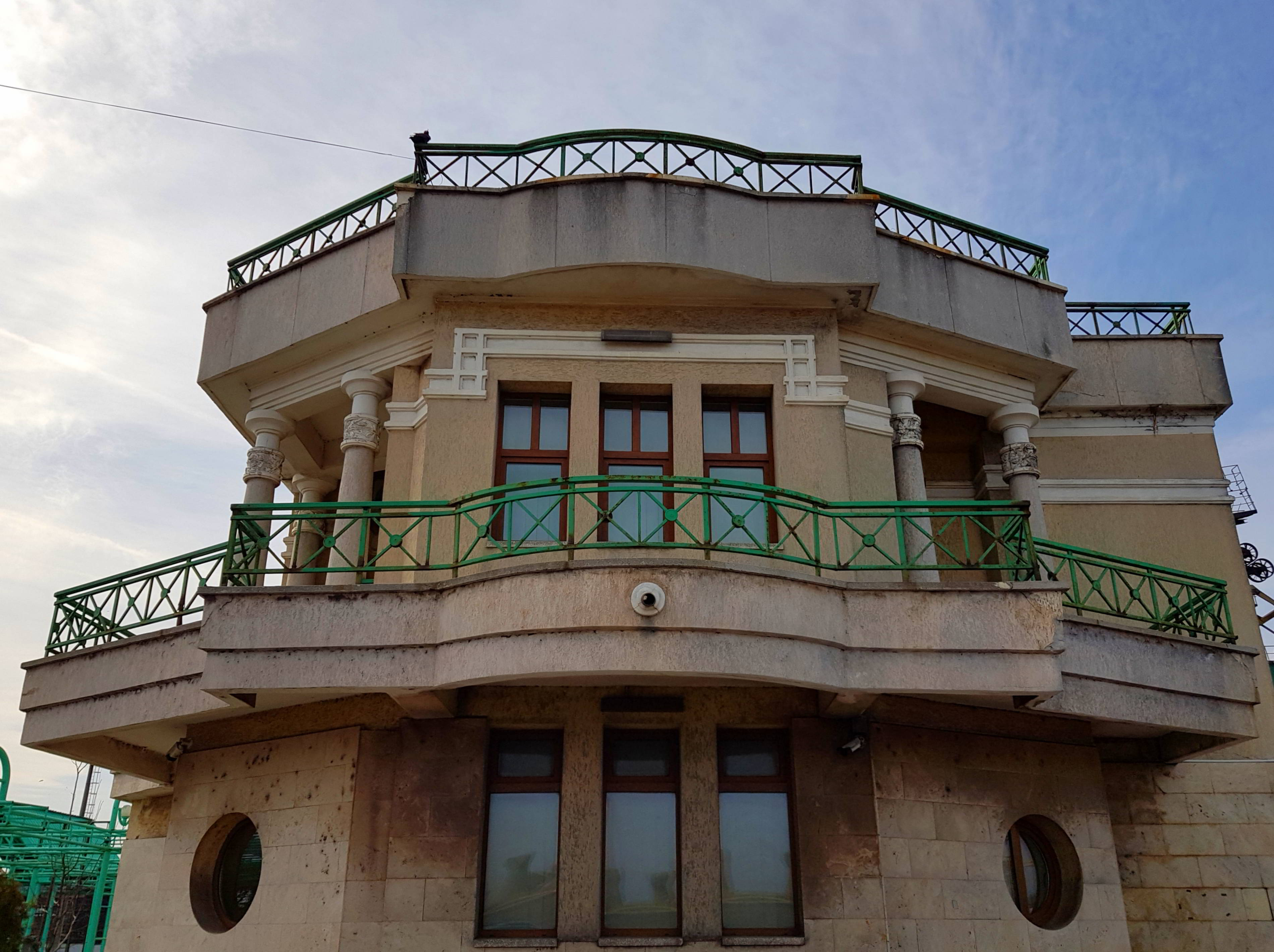
 The first royal residence was built in Constanta by the central authorities starting with the year 1903. The palace was raised for the royal family, who frequently came to the city by the sea from 1905 until the death of King Carol I. The royal palace was designed by architect Grigore Cerchez whose plans were modified by Daniel Renard, who made the Constanta Casino. He introduced Art-Nouveau elements: a gazebo balcony, a corner tower, a terrace with high windows and curved lines designed to attenuate the angles. The royal residence was acquired after World War I by the Ministry of Justice and for a while it was the headquarters of the Court of Appeal. Currently, the building is a historic monument of national interest and the Constanta Tribunal operates within it. However, Queen Elizabeth felt alienated in that palace, which seemed to be far from the sea, and opted for the Royal Pavilion, which she received as a present from her husband few years later.
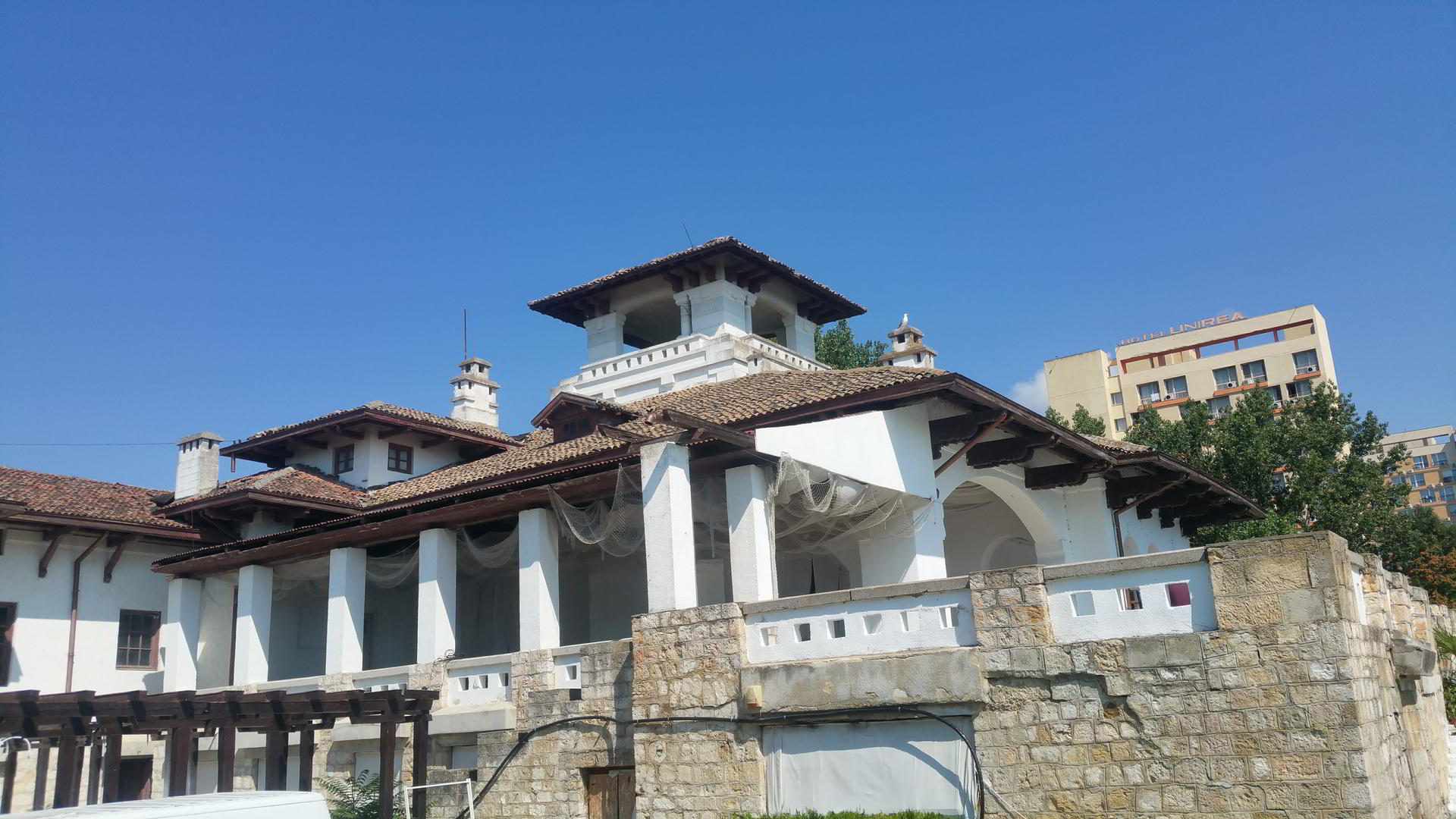
The Royal Pavilion, the present received by Queen Elizabeth from her husband, King Carol I
 King Carol I had a real country project for Dobrudja that materialised through unparalleled construction. It is about Cernavodă Bridge and Constanta Port. In addition, he planned with Anghel Saligny, who was the director of the works in Constanta Port, to surprise his wife, Queen Elisabeth. In 1910, they decided to build for her, after the works of the pier completed, a house in the shape of a boat, I have learned from Doina Păuleanu, the director of the Constanta Art Museum. In the Royal Pavilion project, a great emphasis was placed on the terrace of the dwelling, a place where the queen stayed very often, to be close to the sea she loved enormously. She also spent the nights writing on the terrace. From there, the Queen greeted the ships that went in and out of Constanta Port, waving a white handkerchief. Queen Elizabeth enjoyed only 3 years of her new summer home inaugurated in 1911 because she died shortly after her husband, Carol I. About the Queen’s strong personality, her love for the Black Sea and her above-average intelligence, you can find out more information in this article.
The Royal Pavilion became “The Queen’s Nest”
 The Royal Pavilion returned to the princely and later royal family, Ferdinand and Marie. Queen Marie often went, accompanied by her children, to the pavilion, which she modernised and called “The Queen’s Nest”. She had the idea of these “nests”, she personalised her homes, including with her own ideas, drawings and decorations. Her first nest was made in Sinaia near Pelişor. Queen Marie did not have enough time to attach to this pavilion because she discovered the beach and the Castle from Mamaia.
The Royal Villa in Mamaia, Queen Marie’s project
 The Royal Pavilion burned after a short circuit and was rebuilt, but at that time “Băile Mamaia” resort became a more interesting area. It was inaugurated in 1906, and in 1923, Queen Marie, who was riding a galloping horse on the seashore, decided to make a royal villa for her there. Although she was involved in its construction and constantly inspected the works, made plans, sketches and projects, the Queen later discovered Balchik, which she fell in love with irretrievably. She also built a royal palace with a whole series of suspended gardens, which became her favourite place for summer holidays. With the completion of the seashore construction, Queen Marie moved to Balchik in 1937 and left the property from Mamaia to Mother Queen Elena and Prince Mihai, who soon became king.
 There was a very close relationship between Dobrudja and the royal family. King Carol I attempted to connect and modernise a border province of the Ottoman Empire, which joined the country in 1878. Constanta, Kiustenge back then, was just a sleepy and thrown into oblivion village. It was exploited as a port because the king thought that “Without the sea, our country has far fewer commercial, economic and even cultural and spiritual opportunities.”